

Parents need to prepare early to get their child enrolled in a private school in India for the 2026-27 academic session. This process usually starts in late November to early December through online registrations. Therefore, parents need to verify the age criteria (e.g., 3+ years for Nursery), submit online forms with required documents, and track merit lists. Following these steps early will help the child secure a seat in a private school easily.
For parents, securing a seat in private schools in India might be challenging, especially when they are applying for the very first time. Every private school admission is different. Every school has its own admission rules, important dates, and documentation needs. Thus, it is important for parents to have a complete overview of the admission process in advance to avoid mistakes and apply on time. Let’s take a closer look at how to get admission in private school in India for the 2026-2027 session, making it simple for parents to secure a seat.
- How Private School Admissions Work
- Eligibility & Age Criteria For Private School Admission in India
- RTE 25% Quota – Free Admission Eligibility
- Documents Required For a Private School Admission in India
- Application Timeline For Private School Admission in India
- Private vs Government/State Board School Fees
- Admission Cancellation & Refund Policy
- Conclusion
- Frequently Asked Questions (FAQs)
How Private School Admissions Work

If you are considering private school admission 2026-27, here are some important factors that you need to keep in mind. Understanding these elements will help parents prepare better and complete the admission process without any hassle.
- Age Eligibility: Every private school in India has its own rules for the minimum and maximum age limits for admission for different classes. Parents should check the school’s age criteria before submitting the application.
- School Admission Policy: Check the school admission policy. It has all the details related to eligibility conditions, seat availability, admission criteria, fee structure, and the selection process.
- Right to Education (RTE) Quota: According to the Right to Education (RTE) Act, several private schools reserve 25% of entry-level seats for children from Economically Weaker Sections (EWS) and disadvantaged groups. Therefore, if you are an eligible family, you can consider applying under this quota through the state’s official RTE portal.
- Required Documents: Parents are required to submit all the necessary documents during the admission process. Some of the essential documents include a child’s birth certificate, Aadhaar card, passport-size photographs, parents’ identity and address proof, and previous school records, if applicable.
- Seat Availability: Private school admission in India is hugely dependent on the number of seats available in the class. Popular schools usually receive more applications than available seats. So, it is very important to take early action.
Eligibility & Age Criteria For Private School Admission in India
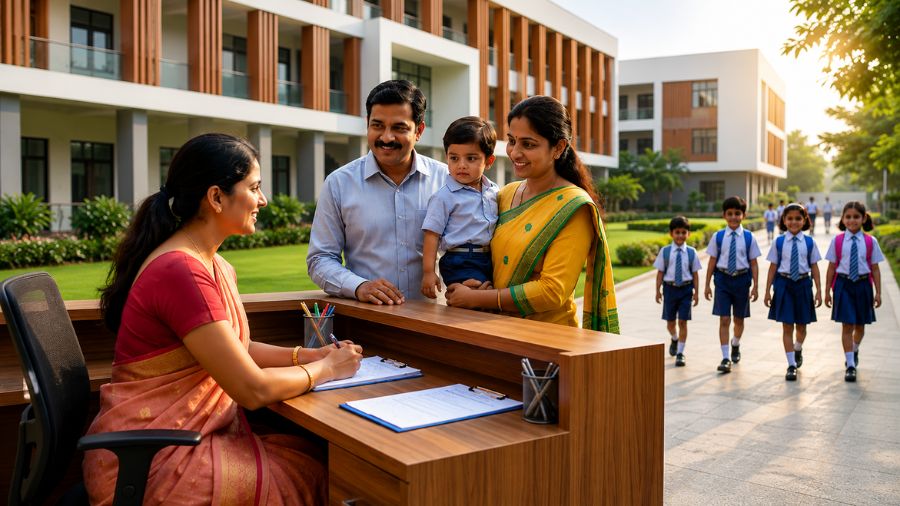
Before starting the private school admission process India, parents should check whether their child fulfills the eligibility criteria set by the school and educational authorities. Here is a quick overview of some common eligibility grounds in most private schools in India.
| Eligibility Factor | Requirement | Applicable For |
| Minimum Age for Nursery | Child should be 3+ years by 31st March of the admission year. | Nursery (Pre-School) |
| Minimum Age for LKG | Child should be 4+ years by the prescribed cut-off date. | Lower Kindergarten (LKG) |
| Minimum Age for UKG | Child should be 5+ years by the prescribed cut-off date. | Upper Kindergarten (UKG) |
| Minimum Age for Class 1 | Child should be 6+ years by 31st March of the admission year. | Class 1 |
| Birth Certificate | A valid birth certificate issued by the competent authority is required as proof of the child’s age. | All Entry-Level Admissions |
| No Screening Test | Written tests or interviews are generally not allowed for entry-level admissions under the RTE Act. | Nursery, LKG, UKG & Class 1 |
| RTE Reservation (25%) | Eligible children from Economically Weaker Sections (EWS) and Disadvantaged Groups (DG) can apply under the 25% reserved quota. | Entry-Level Classes |
| Transfer Certificate (TC) | Students seeking admission to higher classes must submit a Transfer Certificate (TC) or School Leaving Certificate (SLC) along with previous academic records. | Class 2 and Above |
| School-Specific Criteria | Some schools may also consider sibling preference, neighbourhood distance, or alumni status during admissions. | All Classes |
RTE 25% Quota – Free Admission Eligibility
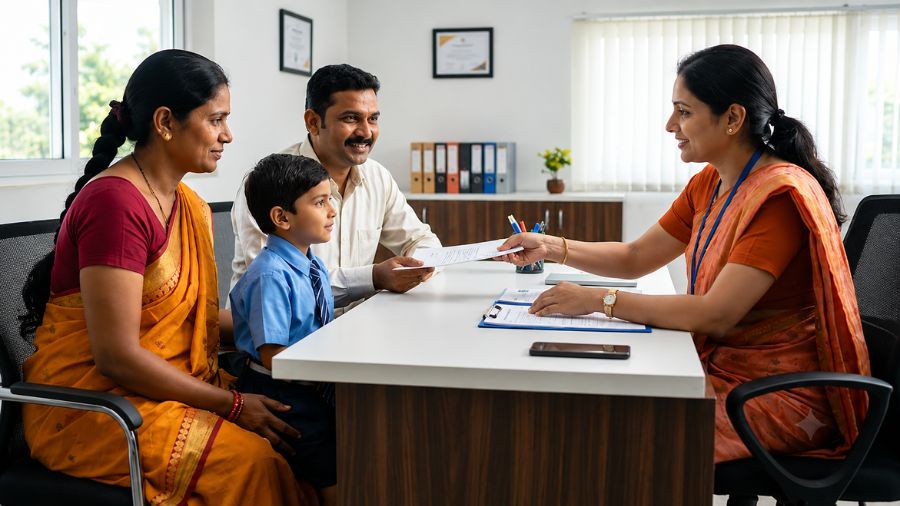
The Right to Education (RTE) Act, 2009, was introduced to help children from Economically Weaker Sections (EWS) and Disadvantaged Groups (DG) to get free admission in many private schools in India. Under this specific rule, there are 25% of entry-level seats are already reserved for eligible students. Therefore, parents can submit an application through their respective state’s official RTE admission portal. However, it is important to apply early.
Who Can Apply Under the RTE Quota?
- Children who belong to the Economically Weaker Sections (EWS) are eligible to get the free seats. The family income should fall under the limit set by the state government.
- Children who fall under the category of Disadvantaged Groups (DG) are eligible for the free seat for their private school admission for 2026-2027.
- Children applying for entry-level classes, such as Nursery, LKG, UKG, or Class 1, depending on the school’s admission policy.
- At last, children who fulfill the necessary age criteria and can provide valid documents, such as an income certificate, birth certificate, residence proof, and category certificate (if applicable), can easily get admission.
It is the responsibility of parents to check their state’s RTE guidelines, eligibility conditions, and application deadlines before submitting an application. Rules can differ from one state to another.
Documents Required For a Private School Admission in India
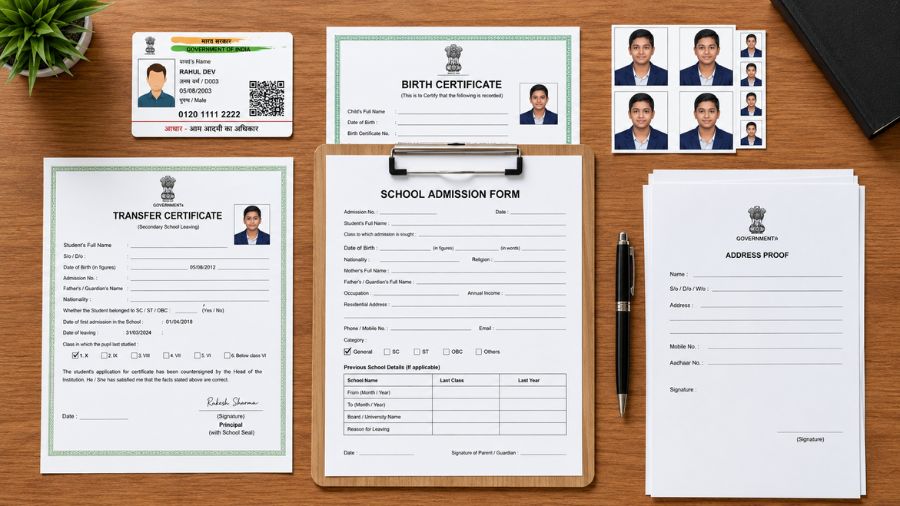
For parents looking for private school documents required for their child’s admission, here is a complete list of documents that they need to get ready before submitting an application.
Having valid documents in advance helps you avoid delays and makes the private school admission process India very simple and stress-free. Documents include:
- Child’s Birth Certificate
- Child’s Aadhaar Card (if available)
- Passport-size Photographs of the Child
- Passport-size Photographs of Parents/Guardians
- Parent’s Aadhaar Card or Other Valid Identity Proof
- Address Proof (Aadhaar Card, Electricity Bill, Passport, etc.)
- Previous School Report Card or Mark Sheet (for Class 2 and above)
- Transfer Certificate (TC) or School Leaving Certificate (if applicable)
- Vaccination/Immunization Record (if required by the school)
- Income Certificate (for RTE/EWS applicants)
- Caste or Category Certificate (if applicable)
- Residence/Domicile Certificate (if required)
- Medical Fitness Certificate (if requested by the school)
- Any Other Documents Specified by the School or State Education Department
Application Timeline For Private School Admission in India
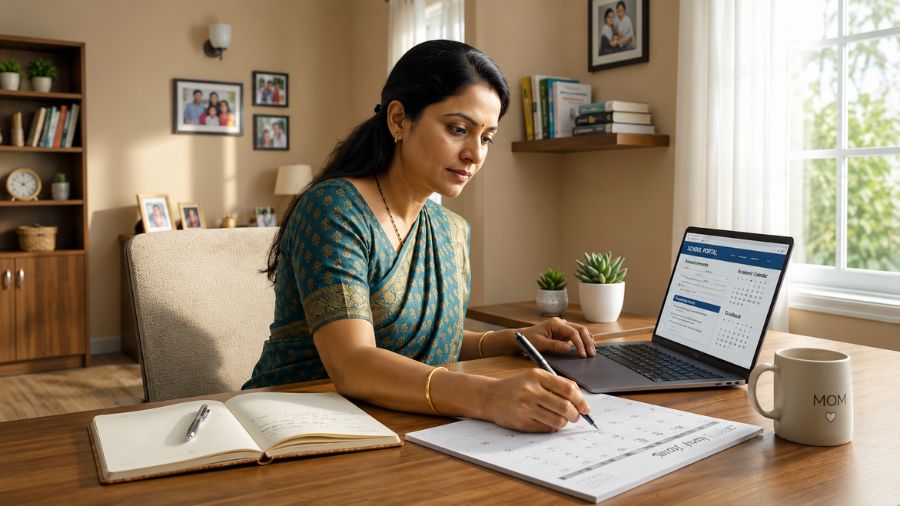
Private school admission for the 2026-27 academic year usually begins in November and December of the previous year. Several schools release their admission notifications, application forms, and vital dates on their official websites months before the session starts. Therefore, if you want to secure a seat for your child in the desired school, make sure to check for regular updates, submit the application early, upload all the documents, and keep track of merit lists. When you apply early, it gives you sufficient time to complete all the formalities easily.
Private vs Government/State Board School Fees
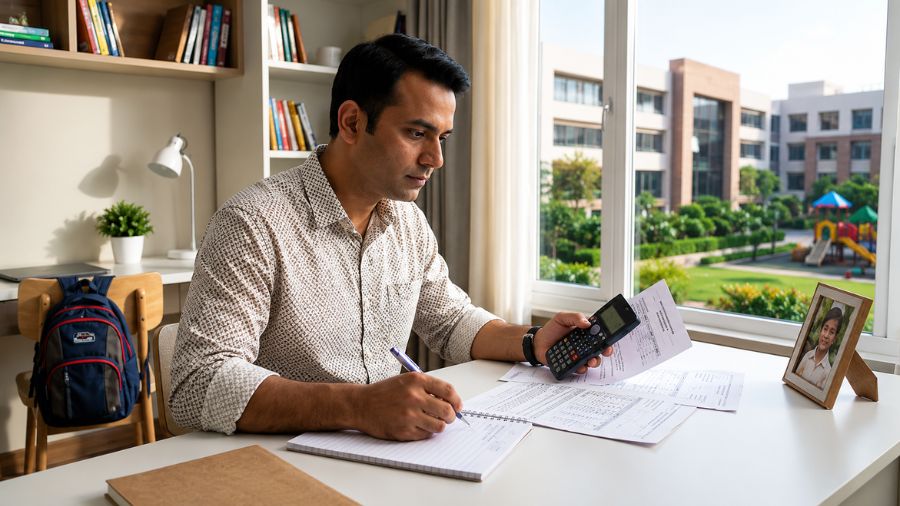
The overall cost of education is one of the most crucial factors for parents while choosing a school. Private school fees India are much higher than state boards because these schools provide additional facilities and activities. On the other hand, government schools provide affordable education. Here is a complete comparison:
| Factor | Private Schools | Government/State Board Schools |
| Admission Fee | Usually charged during admission. | Free or very low. |
| Annual Tuition Fee | High and varies by school. | Free or very low. |
| Books & Uniform | Mostly purchased by parents. | Often provided free or at subsidized rates in many states. |
| Transport Fee | Usually charged separately. | Limited transport facilities; charges may apply where available. |
| Extracurricular Activities | Included but may have additional charges for some activities. | Basic activities with little or no extra cost. |
| Infrastructure | Modern classrooms, labs, libraries, and sports facilities. | Basic infrastructure, depending on the school. |
| Class Size | Usually smaller, allowing more individual attention. | Often larger due to higher student enrolment. |
| Medium of Instruction | English and regional languages, depending on the school. | Mostly regional language, with English-medium options in many schools. |
| Overall Cost | Higher due to tuition and additional facilities. | Much more affordable for most families. |
Admission Cancellation & Refund Policy
Before you confirm your child’s private school admission 2026-27, make sure to understand the school’s cancellation and refund policy. These rules might differ from one private institution to another. So, parents should read the admission guidelines before paying the actual fees.
- Admission Cancellation: Ask for admission cancellation by writing an application to the school.
- Refund of Fees: Refund policies are different in each school. Some schools may refund a part of the fee, while others may not refund admission or registration charges.
- Non-Refundable Charges: Some of the non-refundable charges usually include admission fees, registration fees, and processing charges.
- Cancellation Timeline: There is a dedicated period for cancellation. Schools may provide a refund only if the admission is cancelled within the dedicated time mentioned in their school policy.
Conclusion
Private school admission in India is a complex process that needs to be executed well. By having a complete overview of the admission process, eligibility, RTE quota, required documents, fees, and important timelines, parents can complete the application without any delays. However, if you want to compare private schools, check fee structures, admission timelines, facilities, and other important details in one place, Edhippo Academy is a trusted platform. Visit the platform, evaluate the details, and make the right choice for your child.
Frequently Asked Questions (FAQs)
1. What is the minimum age for Nursery admission?
In most private schools, a child should be 3 years old by the cut-off date, usually 31st March of the admission year.
2. What is the RTE 25% quota in private schools?
Under the Right to Education (RTE) Act, eligible children from Economically Weaker Sections (EWS) and Disadvantaged Groups (DG) can apply for 25% reserved seats in many private schools.
3. How can I improve my child’s chances of getting admission?
To improve the chances of private school admission for your child, make sure to apply as early as possible, submit complete documents, meet the age criteria, and carefully follow the school’s admission guidelines and deadlines.
4. Is a Transfer Certificate (TC) required for every admission?
No. A Transfer Certificate is generally required only for students taking admission to Class 2 and above after changing schools.
5. How can EdHippo Academy help parents during school admissions?
EdHippo Academy is a trusted platform that helps parents to compare and evaluate schools, understand fee structures, check admission timelines, explore facilities, and make informed decisions while choosing the right school for their child.
Also Read: Class 11 Admission Process in India 2026-27: Eligibility & Documents